
Essay
No publisher would fund a browser MMO
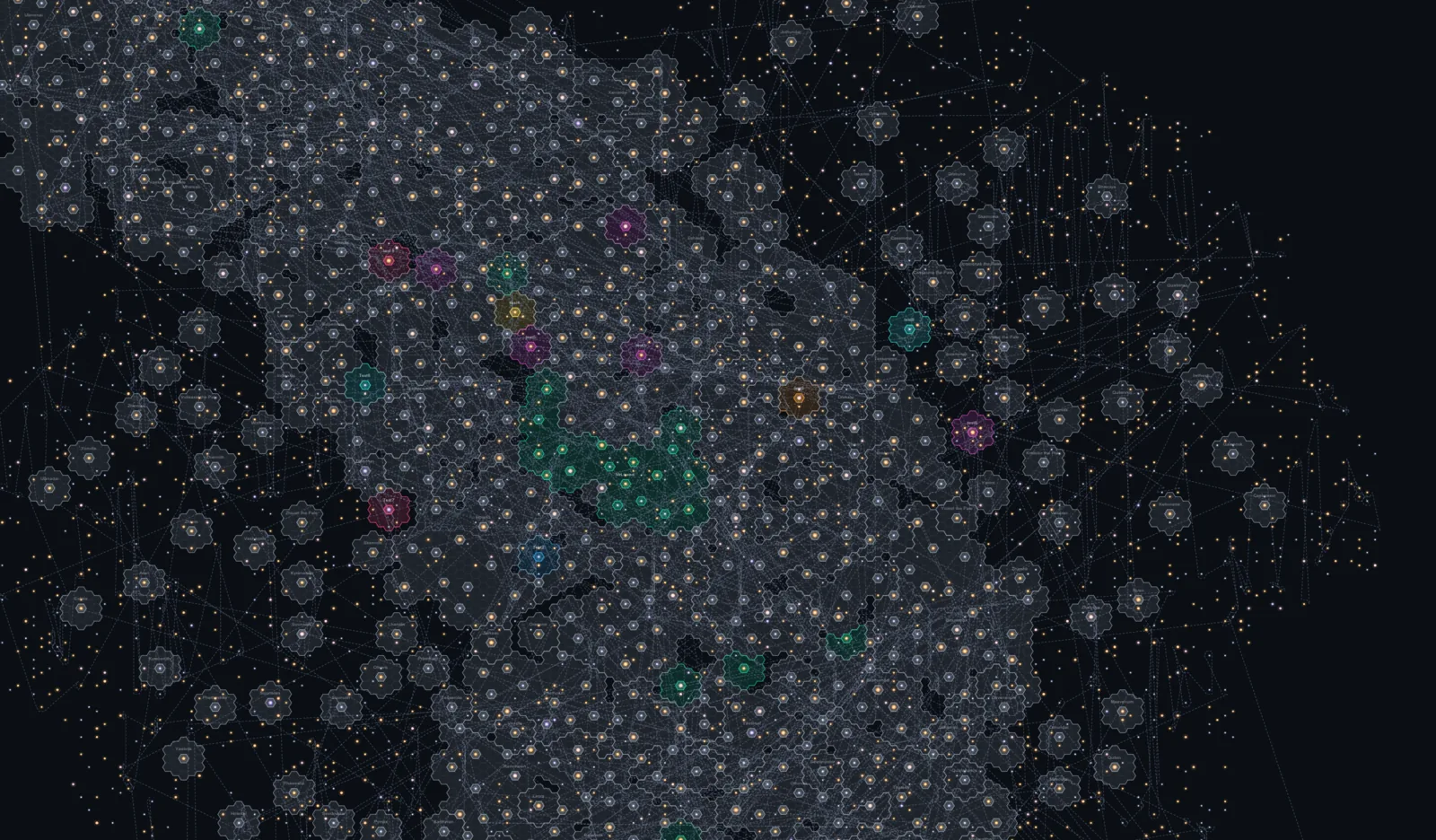
There is a standard explanation for why big game publishers mostly greenlight sequels and licensed properties: development budgets grew until betting on anything unproven became irresponsible, so the safe bet wins by default. A team of two hundred people and a marketing spend to match needs a large and predictable audience, and an unproven genre promises neither.
I think about that logic a lot, because I spend my evenings on the least fundable game I can imagine. Old Light is a slow, persistent 4X MMO that runs in a browser tab, and I am the solo indie developer who builds and runs it.
Failing the pitch meeting#
Walk the concept through a publisher's checklist and watch it die line by line.
There is no install. No store page with a wishlist counter, no launch-day spike to put on a slide. The entire distribution story is a URL.
Retention is slow on purpose. Twenty minutes a day, split over two visits, with no streak to keep and no event you have to show up for. Publishers buy the opposite: daily hours climbing, and a reason you cannot miss a day.
The audience is scarred. The people who would love a persistent browser strategy game are largely the people who watched the genre get hollowed out by pay-for-power, and they approach anything that looks like one with their guard up.
And the revenue arrives late, if it arrives. You cannot sell power in this genre without destroying the thing being sold, which rules out the monetisation that makes these pitches pencil out. Whatever income exists shows up long after launch, from players who stayed because the game kept its word.
Any one of those would sink the pitch. But every number on that checklist is a studio-scale number. The same concept, priced at one person's evenings and a small server, needs none of them to be large.
Slow retention is a hosting budget#
Start with the trait that looks worst on the pitch deck. A game people check twice a day is a game whose servers are mostly idle, and Old Light's backend leans into that as hard as it can.
Nothing wakes up every second to update every empire. A system's resources are computed at the moment someone looks at them, from a saved balance and the time it was saved, and only settled to the database when something actually changes the rate. An empire whose owner is asleep costs a few database rows and no compute. The clocks that do run are cheap and bounded: one timer per queued build, and a once-a-minute sweep that wakes a sixtieth of the NPC empires so the roster is smeared across the hour rather than spiking at the top of it. When a player does act, that action produces one broadcast, not a stream of updates. The NPC empires that fill out the galaxy run through the same code paths as human players, so there is no second simulation burning cycles alongside the first.
I wrote up the backend in detail if you want the mechanics. The point here is the economics. Players who only look in twice a day are the genre's supposed weakness, and they are what lets the whole galaxy fit on a small server. If Old Light had the retention curve of a hit mobile game, it would also have the hosting bill of one, and there would be no solo version of this project.
The URL is the funnel#
No install funnel sounds like a distribution problem until you notice what the install was for. A download justifies itself with production values a browser tab can't carry, and it buys a platform's storefront placement at the price of the platform's cut and the platform's rules.
Skip it and the funnel becomes a link. Someone reads a post like this one, clicks through, and is playing inside a minute with nothing downloaded and nothing trusted to an installer. There is no certification queue between me and a bug fix; what I ship in the evening is live before I go to bed.
The scarred audience flips the same way. People who got burned by pay-to-win are exactly the people who notice when a game refuses to do it, and that noticing is most of how a small game gets a reputation. I've written before about what pay-for-power did to this genre, so I'll keep the stance to one line here: if Old Light ever charges for anything, it will be convenience, and money will not buy a stronger empire.
What a solo developer saves#
Publishers are mostly paying for coordination. A studio needs producers and standing meetings, and it needs a negotiated contract between the client team and the server team, because the alternative is forty people building incompatible halves.
Solo, that cost rounds to zero, and the codebase can be shaped to keep it there. Old Light is TypeScript end to end, in one repository: the client, the server, the NPC empires, the balance simulators, and the generator that rendered the page you are reading. The types the server uses to describe the galaxy are the same files the client imports, so the two halves cannot drift apart without the compiler objecting. Decisions that would be cross-team negotiations are edits.
A QA department made of scripts#
One person cannot manually playtest every matchup, so simulators run the combat and economy math instead.
Combat in Old Light resolves through a pure function: ship counts and a source of randomness in, survivors out, no database touched. That makes it easy to simulate, and there are scripts in the repository that run every matchup I care about thousands of times and write the survival rates to a file. The economy has the same treatment: simulated playthroughs that execute months of build orders in seconds and log what an optimal empire looks like at each stage. Before a balance change ships, it has fought more battles than the live galaxy will see in a year, and a change that bends the outcome curves the wrong way shows up in a CSV before any player meets it.
The honest limit: simulators catch broken math, not boredom. Whether a mechanic is actually fun still requires people, and that judgement comes from the small but growing group of real players who have been in the galaxy since launch in June. It is early, and I don't pretend otherwise.
What the missing publisher costs#
The tradeoff needs stating plainly. No publisher means no marketing budget, so discovery is search traffic and word of mouth, and both are slow. It also means the shipping cadence is set by one person's evenings, and support requests land on that same person.
There was never a funded version of this game to weigh those costs against.
Why the browser is the last open platform#
Every other place a persistent MMO could live puts a gatekeeper or an install between the game and the player. A solo project cannot carry the cut a store takes, and it cannot meet what a download makes people expect. Anyone can put a URL online without asking a platform first. A persistent galaxy also has to keep existing to mean anything, and a URL backed by a small, cheap server is a promise one person can realistically keep for years.
Publishers pass on a game like this because it doesn't produce the returns their scale needs. Running it alone, the only requirements are keeping the server up and the rules fair, both of which I can afford. If a shared galaxy built that way sounds like your kind of game, there is room in it.
