
Essay
Pay-to-win killed the browser MMO. I'm trying to bring it back.
I spent a good chunk of my teenage years in browser strategy games. OGame, Tribal Wars, a few others I've half-forgotten. You'd carve out a corner of a shared world, build something of your own, and check on it between classes. The appeal was simple: the world kept going without you, and everyone was in it together.
Most of those games are still online. Very few of them are still that. Somewhere along the way the genre traded the thing that made it special for a storefront, and I think it's worth being specific about how that happened.
What made them good#
The loop was slow and it was shared. Your armies took real hours to reach the next target. Your resources piled up overnight whether you watched them or not. When you logged in to find a neighbour had raided you while you slept, that meant something, because they were a real person who had planned it against the same clock you were living on.
That shared clock was the whole game. It's what made a border worth holding and an alliance worth keeping. Nobody had a private world running faster than yours. Everyone was somewhere on the same ladder, and where you landed on it came down to how well you played and how often you showed up.
How pay-to-win broke them#
Pay-for-power arrived gradually. First a premium currency you could buy with real money, then resources for sale, then instant builds and production boosts that pushed past what the game would otherwise let you reach. Each piece looked reasonable on its own.
The moment you can pay to skip the clock, the clock stops meaning anything. The player who spends outbuilds the player who plans, and no amount of cleverness closes a gap that a credit card opens in an afternoon. And it wasn't cosmetics or a tidier interface going up for sale. It was the exact thing the whole game is a contest over: time and resources. The leaderboard quietly stopped measuring who played well and started measuring who paid most.
You can feel the moment it happens. The game is still there, the systems still work, but the reason to care has leaked out of it.
Why pay-to-win kills slow strategy games#
In a fast, twitchy game, pay-to-win is irritating. In a slow, shared-galaxy game it's fatal, and for a specific reason.
The entire genre rests on one promise: everyone shares the same clock. That promise is what makes your border with a neighbour real, what turns a raid into an actual contest of skill and timing instead of a contest of spending. Sell some players a faster clock and you've broken the one thing holding the shared world together. The galaxy stops being one place and becomes a backdrop in front of which whales and everyone else play two different games.
The bet Old Light makes#
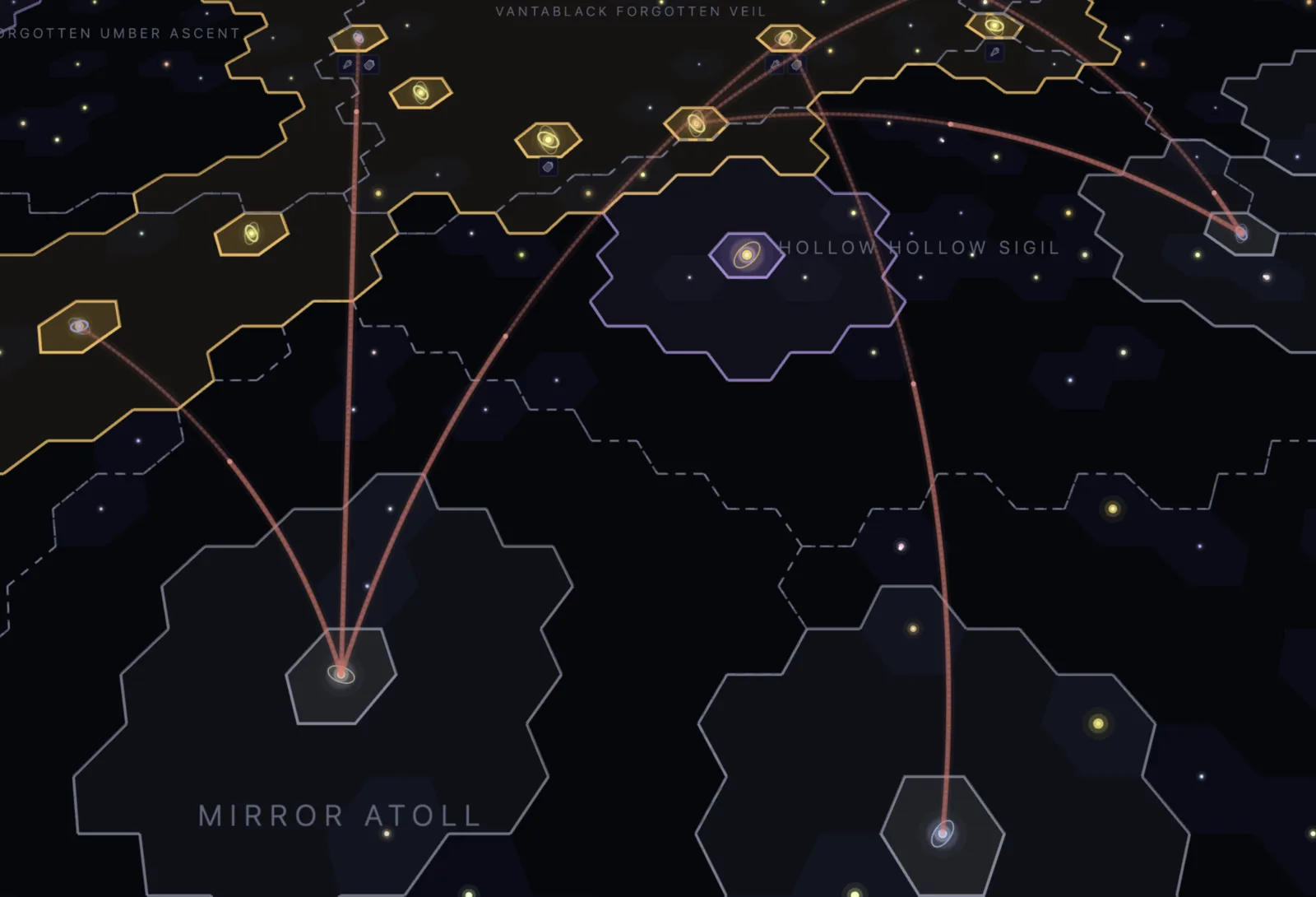
Old Light, the game I'm building, is a slow browser strategy game built on the opposite bet. Every empire on the map runs on the same clock and the same rules, mine included. There is nothing for sale that makes your empire stronger, no resource pack and no shortcut past the build queue. The leaderboard reflects how people actually played.
That keeps the parts of the genre I actually cared about intact. When you meet another empire at a border, you're meeting someone who got there the same way you did. When a fight goes against you because you overreached, the game is teaching you something instead of upselling you. It runs through everything. The economy you have to manage instead of top up, the fleet you have to keep fed, the beginner protection you wait out before the galaxy opens up. None of it would mean much if the right purchase could skip it.
This is a harder way to build a game. The freemium template exists because it works, and turning it down means Old Light grows slower than something happy to sell shortcuts. It is also most of why no publisher would fund a game like this. I made peace with that. I would rather run a small galaxy that's worth sharing than a large one that isn't.
Out of fashion, not dead#
The browser MMO isn't a dead idea. The formula that replaced it is just tired, and tired in a way a lot of people stopped enjoying years ago. There's still an audience for a shared world that respects your time and refuses to sell your opponents an advantage over you.
That's the galaxy I'm trying to build. If any of this sounds like a game you've been missing, come see what it feels like when the only edge is one you earned.
