
Announcement
Old Light is live: a slow strategy game across a shared galaxy
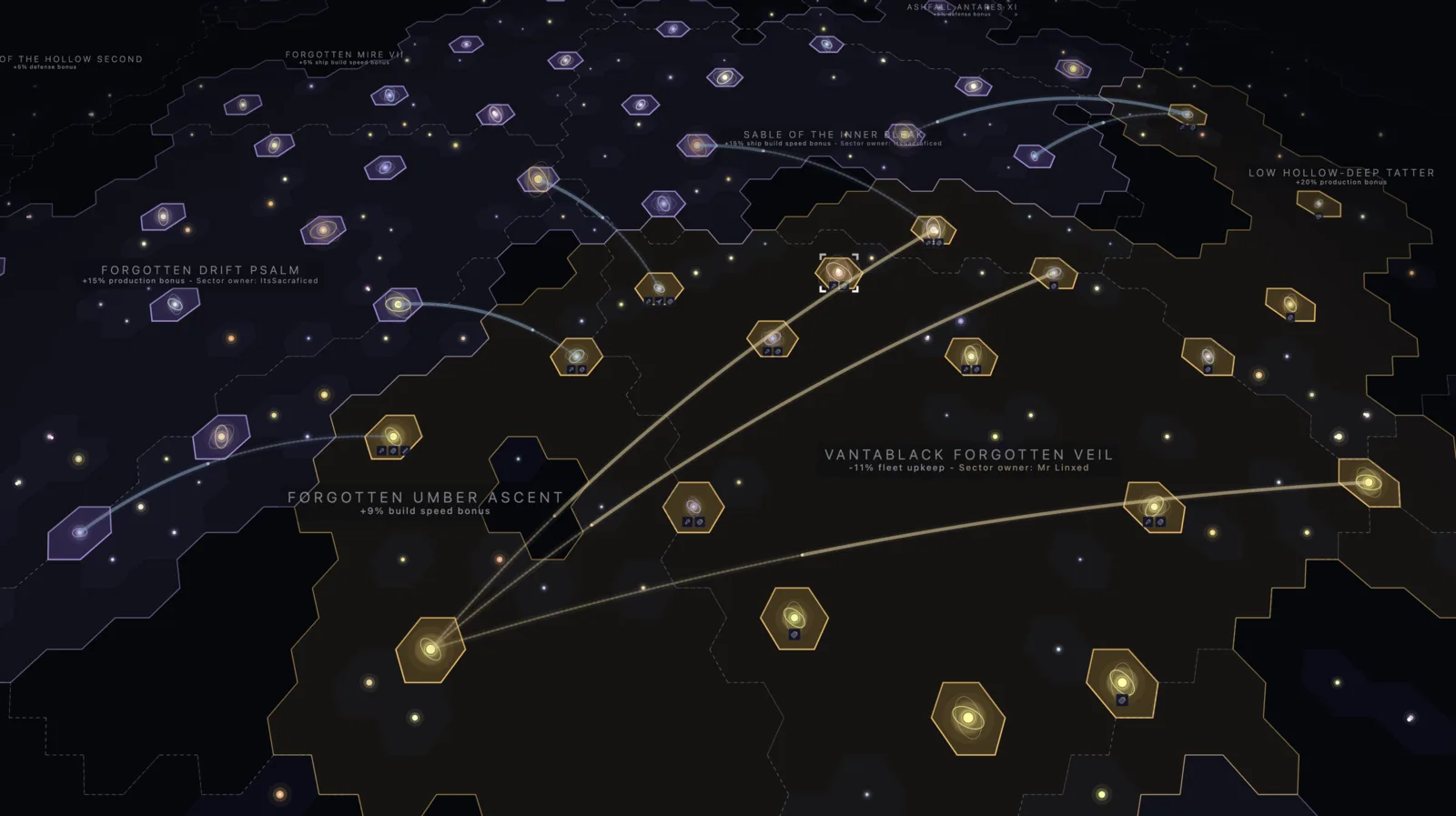
Old Light is open and you can play it in your browser right now. Nothing to install. You start with a single star system and grow it, over real days and weeks, into an empire spread across a galaxy you share with everyone else playing.
Here's what it is and how to get going.
Strategy in real hours#
Old Light is slow on purpose. Builds take minutes to hours and run in real time, even with the tab closed. Nothing punishes you for logging off: no stamina bar, no fun-meter draining while you're away. You queue what you want, close the tab, and come back to find it done.
That makes it a game you can actually keep up with as an adult. Twenty minutes in the morning, twenty at night, is enough to check your queue, read your reports, and send a fleet. The galaxy keeps turning while you're gone.
It's one long game with no rounds and no reset. Your account starts at a single system and grows from there for as long as you keep playing. What you build stays built, and the neighbours you started next to are still there months later.
One galaxy, shared#
Everyone plays in the same galaxy. There's no private map and no instanced lobby; one shared space holds every empire at once.
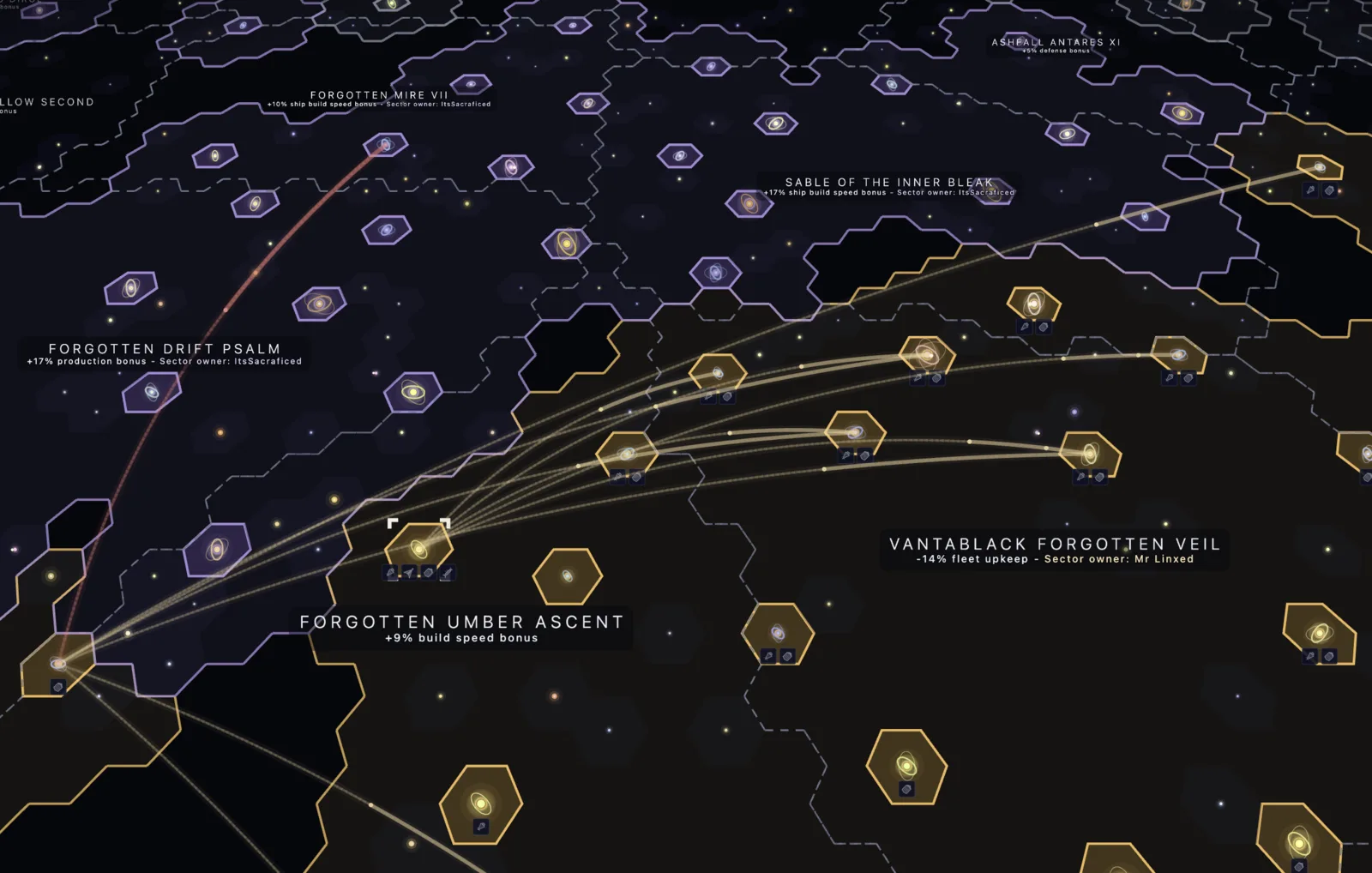
You can see the whole thing on the galaxy map. Every empire's systems and score are public, anywhere, from the moment you start, and the leaderboard ranks them all by what they have built rather than a skill rating. Borders are public too: each system you own projects its colour two hexes outward, and where two empires meet, the older claim holds the line. The first empire into a region sets the boundary everyone after has to fit around.
What stays hidden is what a rival has actually built. Ownership and borders are open, but composition isn't. To find out what's defending a system, and how heavily, you send a flight of probes to scout it. A lone probe gets shot down by anything half-defended, so you send several at once. The map tells you who is where; working out what they can field is on you.
What you manage#
Your empire runs on two industrial resources, mined per-system: palladium (the heavy structural stuff) and iridium (the refined high-tech material). Almost everything costs both, so a healthy empire keeps both extractors climbing together instead of letting one race ahead.
A third currency, credits, is pooled across your whole empire and pays your fleet's upkeep. Build too many ships for your income and your treasury drains; let it hit zero and your ships fight worse and move slower until you fix it. Your military has a running cost, and that cost is a real strategic constraint.
Tying it together is energy. Every structure draws on a system's energy budget, which its reactor supplies. Push the load past what the reactor covers and the whole system slips into deficit, so builds crawl and output drops. The early game is mostly about staying ahead of that: keep the reactor above your load, your depot above your income, and both extractors at the same level.
Fleets, borders, and the rest of the galaxy#
Once you've built a shipyard you can field a fleet of probes for recon and warships for everything else, then start reaching into the space around you. Send fleets to scout, to defend, or to take what a neighbour has.
Combat rewards thought over brute mass. A big enough force breaks a smaller one, but throwing a fleet at someone far weaker than you costs you in morale and bleeds your own ships. Blanket enough of a sector's territory and its production bonus becomes yours. Not every empire out there is human, either: computer-controlled rivals settle the galaxy alongside you and play by the same rules you do.
No pay-to-win#
You will never buy power in Old Light. There is a Premium, and what it sells is convenience and decoration: more room in your build queue, more ways to dress your banner. It cannot hand you resources, and it cannot make a build finish sooner. Every empire on the map, mine included, runs on the same clock and the same rules.
The browser-strategy genre I grew up on was hollowed out by pay-for-power. Old Light is built so the only edge is the one you earn by playing well. Your wallet is not a stat.
How to start#
Make an empire. It's free and runs in your browser. You'll land on your first system with everything at level one and a build queue waiting. Upgrade an extractor, queue a reactor, look around the map at who else is out there.
If you want a guided first session, the Quickstart walks you through your opening moves, and the blog has a longer beginner's guide covering your first days. If you'd rather just poke at things, that works too. The early game is forgiving, and new empires get a window of protection before anyone can come knocking.
The galaxy is already filling up, and there's room in it for one more empire.
