
Article
How to play Old Light: a beginner's guide
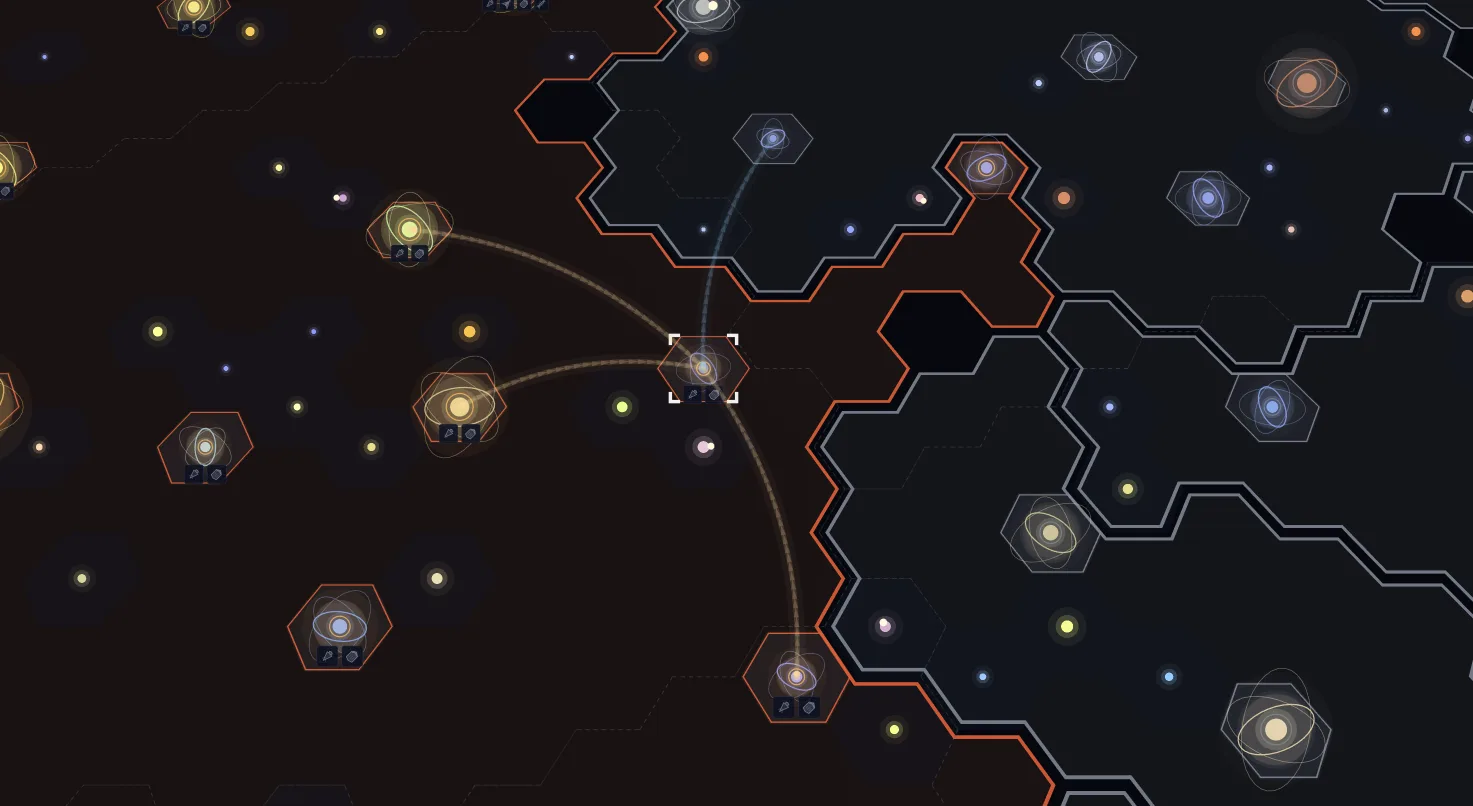
Old Light is a slow, free browser strategy game set in a persistent galaxy you share with every other player there. You start with a single star system and grow it in real time, whether you're logged in or not, and checking in a couple of times a day is enough to steer it. I built the game, so this is the beginner's guide straight from the source: what to build in your first session and what to leave alone until later.
If you'd rather learn as you go, the in-game guide covers every mechanic in detail. This post is the shorter version: enough to get through your first days without wasting them.
What you start with#
When the map loads you own exactly one star system. It already has five core structures at level 1: a Command Center, a Reactor, a Palladium Extractor, an Iridium Extractor, and a Resource Depot. A Trade Hub sits at level 0 ready to build, and the Shipyard stays locked until your Command Center reaches level 3.
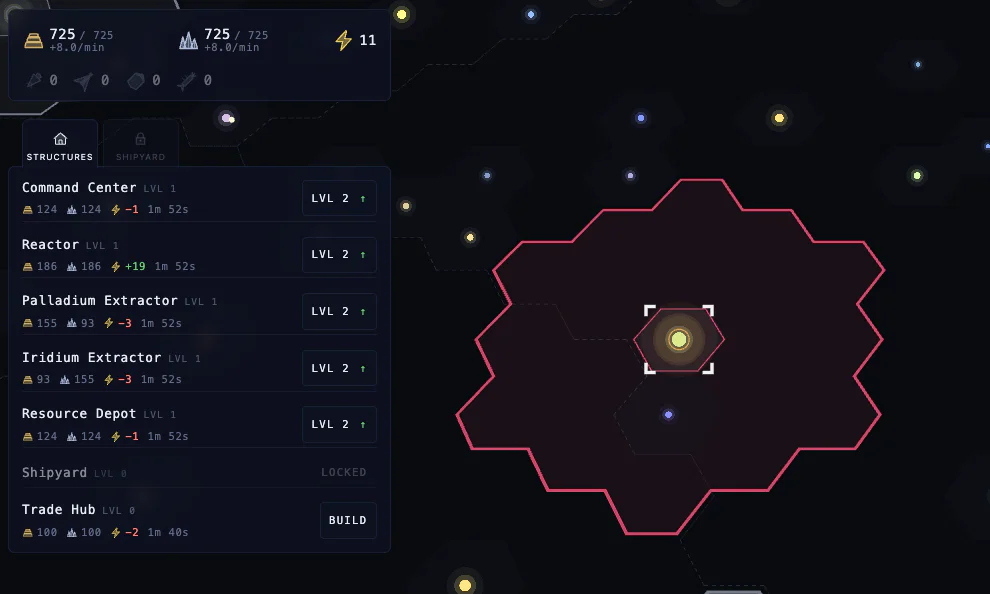
Two resources drive everything early: palladium and iridium. Both are extracted locally in each system you own, and almost every upgrade costs both. Later a third resource shows up, credits, which pay your fleet's upkeep. More on that below.
Your first build order#
The early game is about income. My suggested loop for the first days:
- Upgrade the Palladium Extractor.
- Upgrade the Iridium Extractor.
- Upgrade the Resource Depot.
- Upgrade the Reactor.
- Repeat, and work Command Center levels in when you can afford them.
The reasoning behind that loop:
- Keep both extractors at the same level. Upgrades cost palladium and iridium together, so pushing one extractor ahead just makes the other resource your bottleneck.
- Keep the Resource Depot a step ahead of the extractors. The depot sets the storage cap, how much of each resource the system can hold. Your extractors keep producing overnight, and once you hit the cap, production stalls. A depot that's a level ahead means you wake up to a full stockpile instead of hours of lost income.
- The Command Center compounds. Every level shortens every future build in the system, and level 3 unlocks the Shipyard.
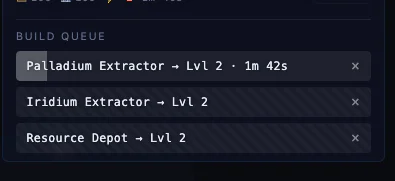
Each system has a build queue with three slots. Resources are spent the moment you queue a job, not when it starts, and cancelling refunds 70%. Queues keep running while you're offline, so the real skill of the early game is leaving with a full queue. Three stacked upgrades finish overnight in order.
Watch your energy budget#
Every structure draws energy while it runs, and the Reactor sets the ceiling. Go over that ceiling and the system enters an energy deficit: resource production slows, builds take longer, and Trade Hub income drops. It's not a hard stop, but a deficit left running overnight quietly costs you hours of progress.
The habit that prevents it: whenever you queue an upgrade that raises the energy load, check the Reactor covers it. If not, queue a Reactor upgrade first and keep the Reactor a step ahead of demand.
Use your five days of beginner protection#
Every new empire starts with a shield. For five days no other player can attack you, probe you, or land a vanguard on your stars. There's one way to lose it early: send anything hostile at another human player, even a single probe, and the shield drops for good.
Attacking NPC empires does not break the shield. NPCs are the grey empires on the map. They play by the same rules you do, with no hidden bonuses, and they pace themselves to the humans near them rather than racing ahead. They're exactly what the shield window is for: get your economy running, then take your first swings at a grey neighbour where losing costs you nothing but ships.
After the shield expires, the morale system takes over. An empire much larger than you fights at reduced strength when it attacks you, so growing your way out of the early game stays viable.
Reading the galaxy map#
Old Light has no fog of war on the map itself. You can see every empire's territory, systems, and score across the whole galaxy from day one. Your empire renders in your own banner colour, other humans fly theirs, and NPCs are always grey. You don't even need an account for the overview: the public galaxy map shows the live state of the galaxy, and the leaderboard ranks every empire by score. Inside the game, the full map has search by name or coordinate for finding a particular empire or system.
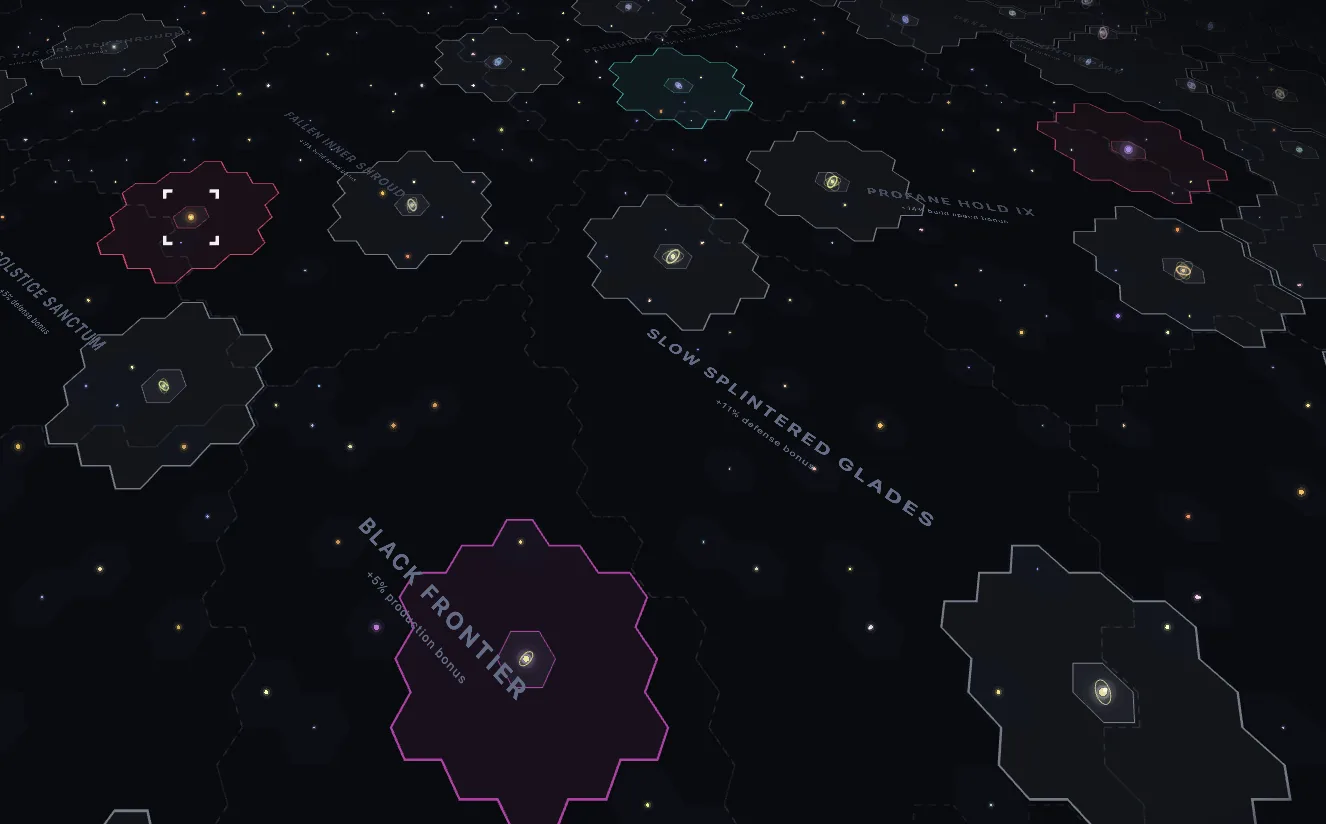
What stays hidden is what's inside. The map shows a rival system's score, a single number that sums up structure investment, but not which structures got the levels or what fleet is parked there. A low-scoring system can still hide a large fleet. The only way to see inside is to scout it. That coarseness is deliberate; the reasoning is in why Old Light has no Elo rating.
Your first ships and the credit economy#
Once your Command Center hits level 3, build the Shipyard. The game has four ship classes:
- Probe: fast and cheap, the scout. Available from the base Shipyard level.
- Marauder: the light offensive ship.
- Sentinel: the light defensive ship.
- Vanguard: the slow, expensive colony ship, and the only one that can capture a star.
Ships cost palladium and iridium to build, and credits to keep flying. Credits are an empire-wide treasury fed by your Trade Hubs, and every ship drains a little of it per day as upkeep. If the treasury hits zero, ship production pauses everywhere, and your fleets fight and travel worse until it recovers. So before you fall in love with a big fleet, level the Trade Hub. Income should stay comfortably ahead of upkeep.
Scouting with probes#
A flight of probes sent at a rival system is a recon mission: the survivors take a snapshot of the structures it built and the fleet parked in orbit. The more probes survive the arrival, the more detail you get back. The intel is a snapshot from the moment of arrival, so it goes stale, and you send again when it matters. The defender, meanwhile, sees your incoming flight and where it launched from, but not what's in it.
The one rule: never send a single probe. Defended systems shoot down incoming scouts with their own probes, so a lone probe usually dies before it reports anything. Send a small flight every time. Probes are cheap enough that the losses don't hurt.
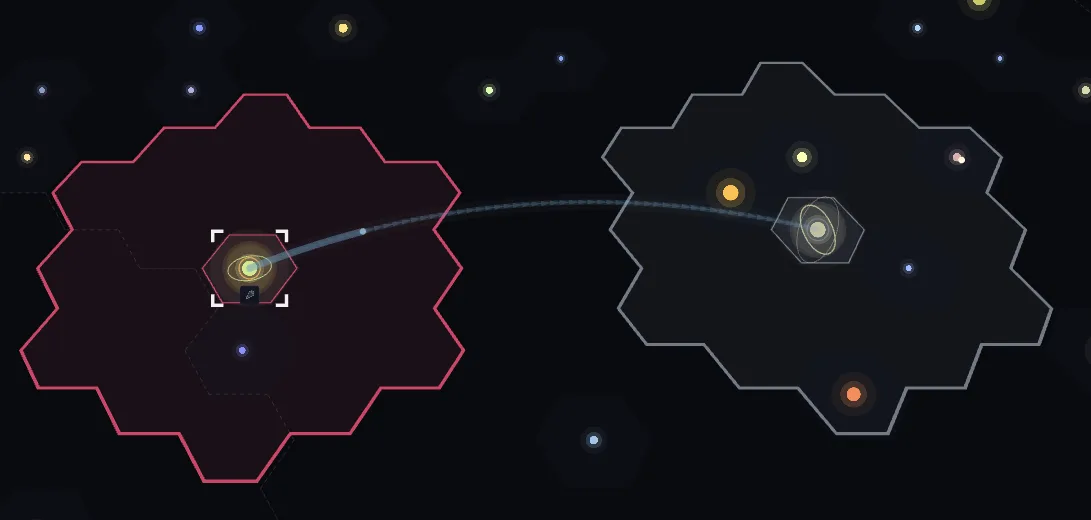
Claiming your second system#
Expansion runs through the Vanguard. It's slow and it doesn't fight, and at 40,000 of each resource it's not a day-one purchase. The short version so you know what you're saving toward:
- A dormant star, one no empire owns, resists with hostility, which starts at 50. Each arrival rolls 20 to 35 damage against it, and extra vanguards in the same fleet don't stack. Drive hostility to zero and the star is yours, consuming the vanguard; fall short and your vanguards ride home for another run. Expect two runs per claim, sometimes a third.
- A new claim must sit at least 3 hexes away from every star you already own, so your empire spreads rather than clumps.
- Capturing a star from a rival works the same way against its loyalty, except a battle resolves first, so you'll need a combat escort. Read Capturing before you try it.
Every claimed system comes with the same starter roster at level 1 and a build queue of its own, so a second system roughly doubles the decisions you make per session.
Mistakes I watch new players make#
- Letting the Resource Depot lag. Waking up at the storage cap is the most common way beginners lose a night of income.
- Ignoring an energy deficit. The system doesn't stop, it just bleeds speed. Check the energy number in the HUD when builds feel slow.
- Probing a human during the shield. One curious probe at a human neighbour and your five protected days are gone.
- Building a fleet before the Trade Hub. Upkeep with no credit income drains the treasury, and a dry treasury weakens every ship you own.
- Scouting with one probe. It usually dies before it reports, and the defender still learns you tried.
Common questions#
More general questions are answered in the Old Light FAQ.
Is Old Light free to play?#
Yes, and there is nothing for sale that makes your empire stronger. No resource packs, no queue skips. Everyone builds on the same clock.
How often do I need to log in?#
Twice a day is the intended rhythm, and the first days ask even less. Fill the build queue and close the tab; the jobs finish on their own.
Does Old Light progress while I'm offline?#
Yes. Extractors keep producing and queued builds finish while you're away, and fleets already in flight keep flying. That's also why the storage cap matters. How it works under the hood is covered in game networking for a slow strategy game.
Can other players attack me on day one?#
No. For your first five days the shield blocks every hostile move against you, including probes. Only you can end it early, by attacking a human first.
What should I build first in Old Light?#
Extractors, evenly. Then keep the Resource Depot and Reactor each a step ahead of them, and work toward Command Center level 3 to unlock the Shipyard.
Does Old Light have ranked matchmaking or an Elo rating?#
No. Everyone plays in one shared galaxy, so there is nothing to matchmake. The leaderboard ranks empires by structure score; the full story is in why my strategy game has no Elo rating.
