
Essay
I built a strategy game you only have to check twice a day
For a while I thought I'd just gotten worse at games. Slower reflexes, no room for a raid night, every new release losing me inside a week. Took me a while to see it wasn't really about me. Somewhere along the line the games got rebuilt around free time I no longer had.
Most of modern gaming asks a lot of your calendar. A competitive shooter or MOBA needs your reflexes and forty uninterrupted minutes with no pause button. Live-service games pull you back every few hours before some meter runs dry. And a raid MMO expects you online Tuesday at eight sharp, nineteen other people counting on you to show. None of that is a flaw. It's built for a life with big defendable blocks of free time, and at some point I stopped having those.
There's one genre that never asked for any of it. Somehow it's the one everybody forgot.
The strategy format that always fit a busy life#
Asynchronous, shared-world strategy. The browser-strategy lineage: OGame and Travian, Tribal Wars, and everything downstream of them. Forget any single title for a second and look at the shape they all share. You play in short sessions. The world advances while you're logged off. Nothing needs your reflexes, and nothing needs you online at a specific minute alongside a specific group of people. You sit down, make some decisions, set a direction, and close the tab. The game keeps its own time.
That shape is decades old and it's still the most life-compatible format in gaming. The strategy runs deep and the competition is real, but what it rewards is good decisions rather than a clear calendar. Almost nobody writing about strategy games for busy adults ever points at the genre that has been doing exactly that for twenty years.
What this format does not fix#
The genre oversells itself plenty, and I won't pile on. The limits here are real, so here they are.
This shape does not make competition free of your time. None of these games do, and Old Light, the one I ended up building, doesn't either. Chase the top of the table and you'll find exactly what you'd find in Travian: the player who checks a third time will catch the stalled queue and land the raid in the open window you slept through. Competition rewards attention, and at the sharp end that means a job. I'm not selling you a game that repealed that, because no one can.
What the format gives you instead is a floor the other genres don't have. Check in twice a day and you've still got a real game: a corner of a shared world, a border that means something, a rank on the table you reached on your own schedule rather than a server's. Early on it asks even less, a glance to point your build queue and you're done for the day. You won't top the leaderboard playing this lightly. You'll have a genuine game, which on that little fixed time most of the rest of gaming can't give you.
That floor is the whole pitch, and it's not a new idea. It has been sitting in an unfashionable corner of the internet for years while everything louder got built for people with more free time than I've got.
Where Old Light comes in#
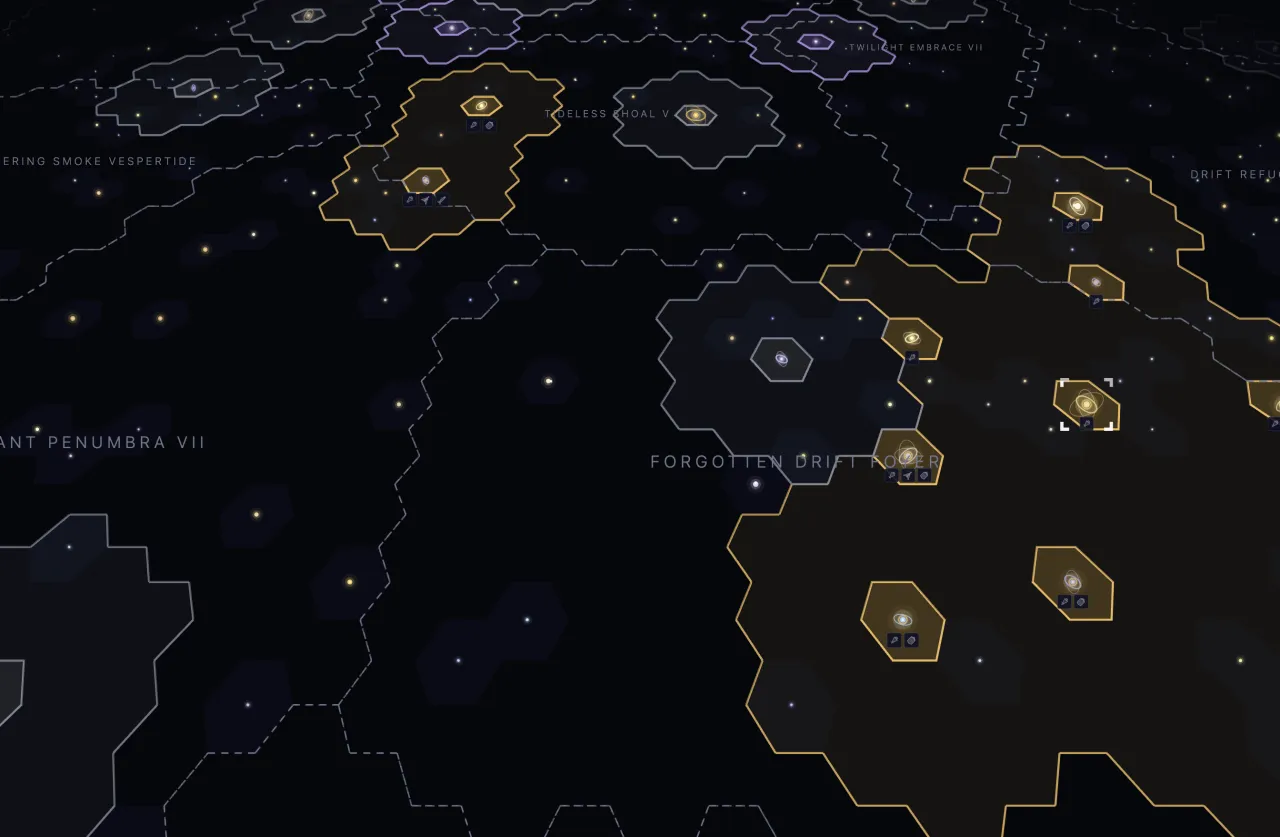
So I built one. Old Light is a new entry in that old format, a slow strategy game across a shared galaxy, played in short sessions and advancing while you're gone. The economy ticks along on its own timers and fleets take real hours to cross the map, while you steer the whole thing in a couple of short sessions a day. If you played the classics, the rhythm will feel familiar within minutes, because I didn't reinvent it. I just think the format deserves a current, well-built home instead of only twenty-year-old ones.
The one thing I refused to carry forward is what rotted the genre from the inside: pay-to-win. Old Light has nothing for sale that makes your empire stronger, no resource pack, no shortcut past the build queue. Same clock for everyone, mine included. The format already respected your time. The thing it stopped respecting, over the years, was your effort, the moment a credit card could outrun a good plan. That's the part I actually set out to fix.
What slow costs you#
Slow is a real cost, so let me be straight about what you give up.
You don't get the hit of a fight resolving the instant you click. A fleet takes real time to cross the map, and when it arrives the battle resolves without either side watching, so the raid you plan in the morning lands in the afternoon and you learn how it went when you next log in. Plenty of people want minute-to-minute action and bounce off this on sight. Old Light isn't for them, and I stopped trying to make one game for everyone.
I also walked away from the cheap retention tricks. No login streak, no manufactured emergency engineered to drag you back before a meter empties. Those guilt mechanics work, and that's why they're everywhere; turning them down means I grow slower than something happy to use them. What I get back is that nobody resents Old Light for the evening it took. You log off and it lets you go.
Who this is for#
If you loved games and aged out of the ones that wanted your reflexes or your Tuesday nights, this format is the way back, and Old Light is one door into it. You didn't get worse. The games you drifted toward were just built for a schedule you don't keep anymore.
You need to check in twice a day, less than that at the start, and the patience to let a galaxy take its time. Everything between those sessions runs without you. If you want to see what those sessions actually involve, I wrote a guide to your first days.
