
Article
Browser games like Grepolis, Ikariam and Forge of Empires
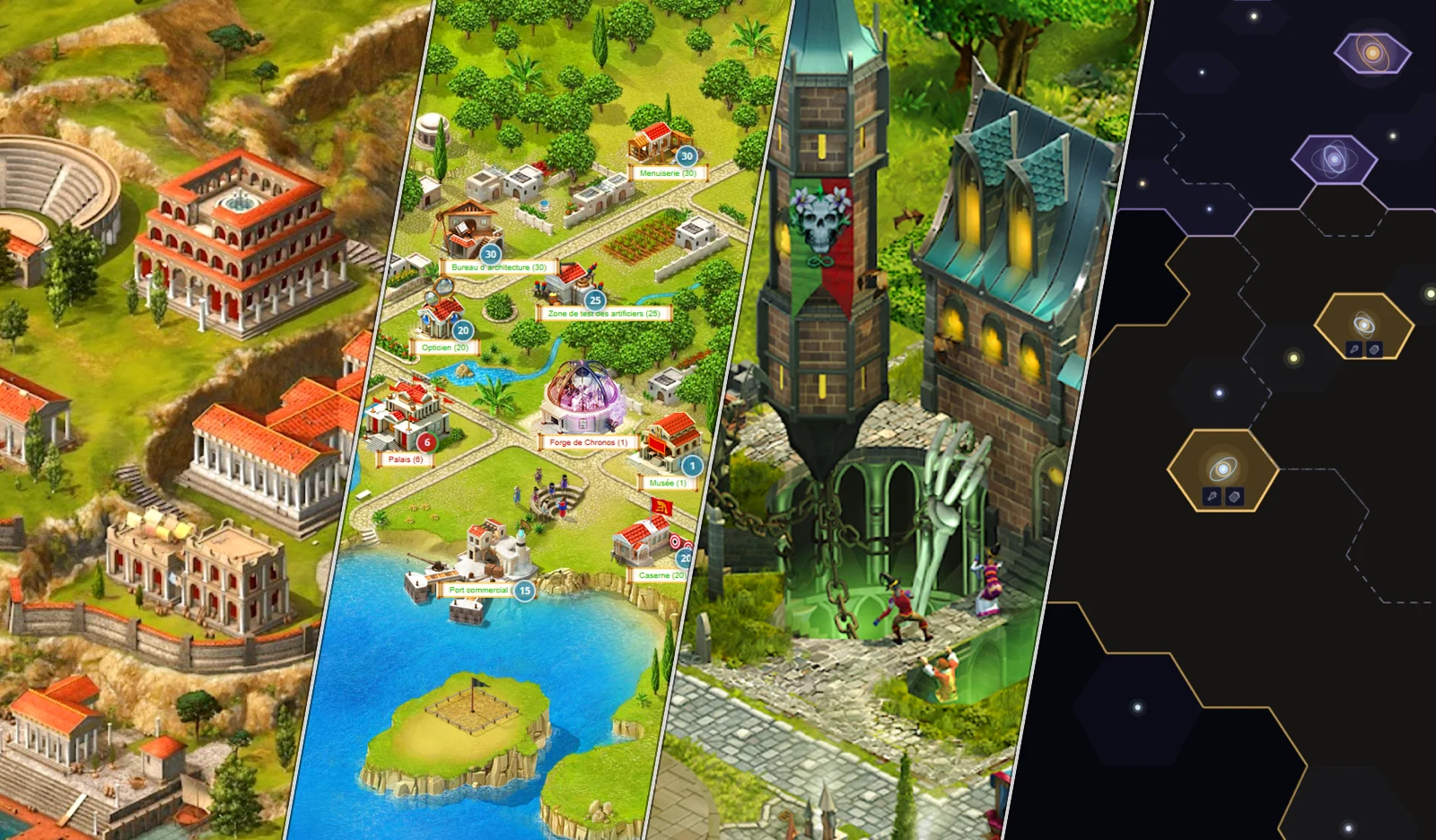
Grepolis, Ikariam and Forge of Empires built a genre on one promise: a city or an island that grows while you are off doing something else, in a shared world full of real neighbours to trade with, ally with, or fight. You log in, queue a few builds, glance at the map, and get on with your day. Decades in, that loop still works.
What they share goes deeper than the setting, and it is the thing most people end up wanting to escape. A look at all three, then a slower, fairer take on the same idea.
What are the best games like Grepolis, Ikariam and Forge of Empires?#
They are all city-building browser games built on a shared world and heavy alliance play, and after more than a decade the three of them still set the standard. Old Light trades the cities for star systems and keeps the shared-world strategy, minus the premium currency and the round-the-clock schedule the genre runs on.
The three classics#
Grepolis#
Grepolis is Greek-mythology city strategy from InnoGames: build a polis, recruit land and naval units, and fight across an island-dotted sea with some of the genre's best alliance play. The world rounds build toward a contested endgame, which gives it momentum the endless games lack. It is also where the time demands sharpen. Late-game attack timing and defence coordination reward being online at the wrong hours, and Gold smooths the parts the free game leaves rough.
Ikariam#
Ikariam leans on trade and expansion across ancient islands, with a gentler, more economic rhythm than its war-first cousins. Managing resources and shipping them between islands is the heart of it. The premium Ambrosia currency sits between you and the smoothest version, and the late game still turns into the familiar timing-and-coordination grind.
Forge of Empires#
Forge of Empires is the most polished and most popular of the three: guide a city from the Stone Age into the future, one era at a time, with a deep building-and-tech loop and a huge playerbase. It is the easiest to fall into and the easiest to keep spending on; Diamonds, the premium currency, are everywhere, and the efficient way to progress assumes you will buy some.
The common thread#
All three are good at what they do, and all three are built around the same two things: a clock that eventually punishes you for logging off, and a store that sells the advantage you were supposed to earn. The genre's running frustration is that it costs you either your evenings or your wallet.
What "without the store" means#
A slower kind of browser strategy game has grown up in response. It runs on build timers and lazy accrual, so your economy keeps ticking while the tab is closed. There is no stamina meter, no live event you must show up for, and, the part that matters, nothing in the store that makes one empire stronger than another. You play in short sessions, the world keeps turning while you are gone, and the only thing separating players is the decisions they made.
Where Old Light fits#
Old Light carries the same idea into a shared galaxy, trading cities and islands for systems and stars. Where Grepolis hangs everything on a single polis and the sea between islands, here you hold whole sectors worth keeping for their bonuses, with public ownership and borders you can read across the whole map. The rest will feel familiar: one persistent world, rivals you scout with probes, and fleets you send to defend or conquer. Builds take minutes to hours, the early game is forgiving, and there is no pay-for-power anywhere in it. Your opening build order and first scouting runs are covered in the beginner's guide.
The trade is plain. Old Light is young, so the galaxy is not as crowded or as deep as something that has run fifteen years, and it swaps the city-builder fantasy for leaner space strategy. What stays is the shared-world game the genre is loved for, everyone on one clock, nobody outspending you to the top.
How they compare#
| Feature | Grepolis | Ikariam | Forge of Empires | Old Light |
|---|---|---|---|---|
| Pace | Timed rounds | Slower, trade-led | Real hours | Real hours |
| No pay-to-win | No | No | No | Yes |
| No fixed schedule | No | No | No | Yes |
| Free to play | Yes | Yes | Yes | Yes |
Which one to pick#
For the deepest, most populated version of the classic city grind, Forge of Empires is the easy on-ramp and Grepolis has the sharper warfare, as long as the store and the late-game hours do not bother you. If what burned you out was paying to keep up, Old Light is worth a look.
Common questions#
What are the best games like Grepolis?#
Ikariam and Forge of Empires are the nearest relatives, all three built on a shared world, city building and alliance play. Travian is the other obvious step across, covered in games like OGame and Travian. Old Light keeps the shared world and the alliance-scale map, trading cities for star systems.
Are there city-building browser games without premium currency?#
They are rare, because the era these games come from was built around one. Grepolis, Ikariam and Forge of Empires all sell theirs. Old Light is not a city builder, but it takes the shared-world strategy those games are played for and sells nothing that makes an empire stronger.
What is the difference between Grepolis and Ikariam?#
Grepolis is war-first, with Greek-mythology city strategy built around alliance warfare and timed world rounds. Ikariam is trade-first and slower, with expansion and shipping between ancient islands at its centre.
Is Old Light free to play?#
Yes, free in a browser with nothing to download. No payment buys a bigger empire or better intel, so there is no pay-for-power in it.
