
Essay
Peace treaties in a browser strategy game
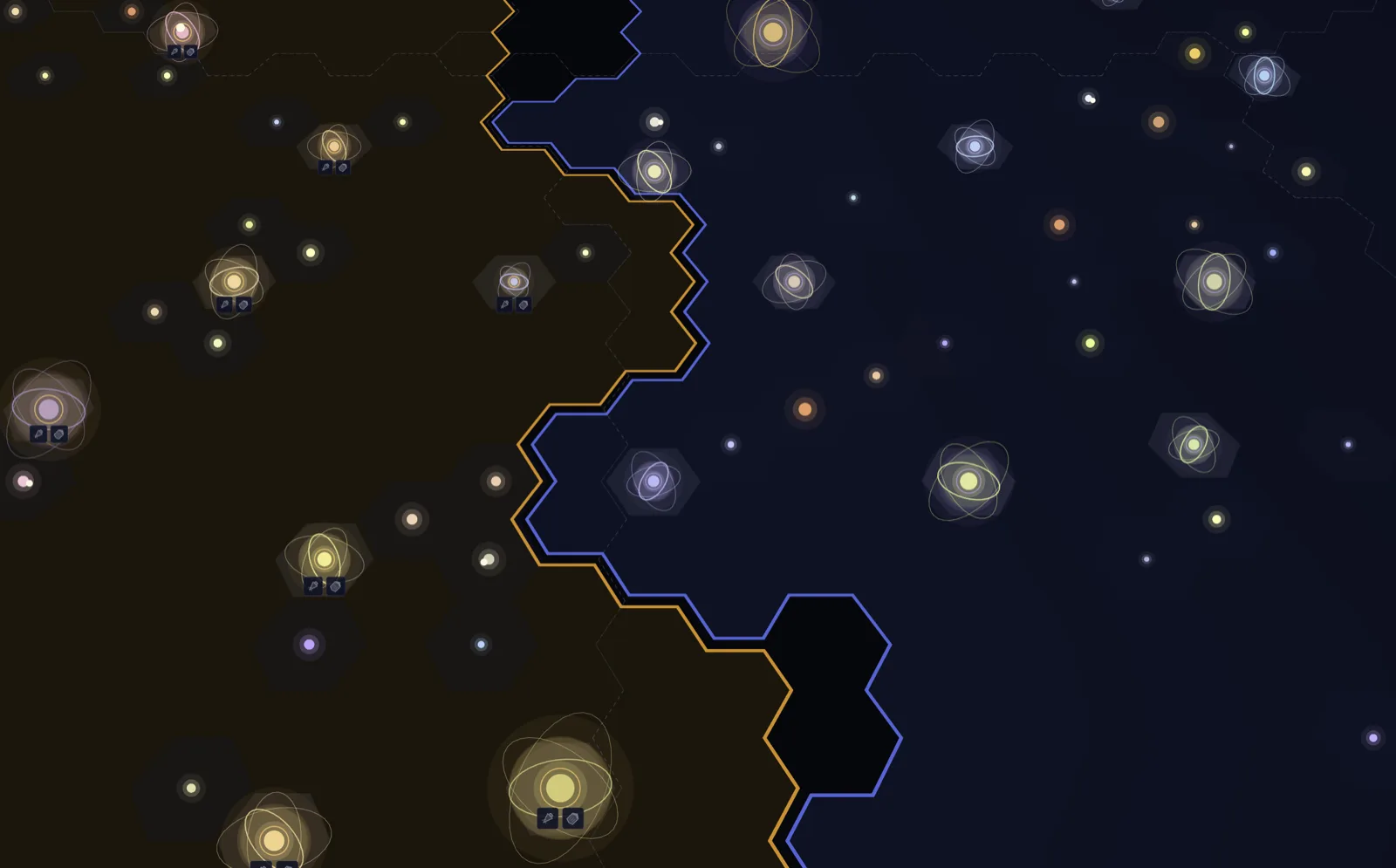
In July I wrote that alliances were next for Old Light, the browser strategy game I am building. They are not here yet. What shipped instead is much smaller: two players can sign a peace treaty, and once it is signed neither of them can walk out of it.
I think the small version is the more interesting one, and stopping short of the big one was deliberate.
What a treaty is#
There is no treaty screen. A treaty is a line item on a deal, sitting alongside the systems and credits a deal can already move. You add "Peace treaty" to what you are offering, the other player accepts, and the peace is running before the claims have finished flying.
It lasts 14 days, counted from the moment the other player accepts rather than from when you proposed it. While it runs, nothing hostile can cross between you. Attacks are refused, and so are probes, which stops the two of you scouting each other as well.
The clock is visible to both of you and to nobody else. When it runs out the peace stops on its own, and nothing is sent to either of you to mark it.
A peace treaty you cannot break alone#
There is no button for it. If you want out before the 14 days are up, you propose a second deal that ends the treaty, and the other player has to accept that too. If they would rather keep the peace, the peace keeps running and your fleet stays in dock.
This was the whole reason to build it. Before treaties you could already message a neighbour and agree to leave each other alone, and people did. What you could not do was make that agreement cost anything. A promise you can revoke the instant it becomes inconvenient only tells the other player what mood you were in when you made it.
So the treaty binds, and signing one costs you something real: the option to attack this specific person for two weeks, including the week where attacking them turns out to be the obvious winning move. Paying that is what makes the offer worth anything to the person receiving it.
A fleet already in the air when a treaty is signed turns around when it arrives. The server re-checks at the moment of arrival rather than only at launch, so signing peace while your own attack is still flying gains you nothing.
Peace is something you earn#
The same gate that governs deals governs treaties: a verified account that is at least ten days old, with a real empire behind it. A player still under beginner protection cannot sign one either.
The messaging rule applies to a new surface. A throwaway account is worth nothing in Old Light, and now it cannot manufacture diplomatic cover either. If treaties were free to sign, the move would be to spin up a second account and use a treaty with it as a safe wall on one flank.
What a treaty does not do#
A treaty is narrower than the word suggests. It covers violence between two specific people.
- Trade keeps working. You can ship resources to a treaty partner and they can ship to you, because trade never goes through the attack path in the first place.
- Deals keep working, including deals that move systems between you.
- Your partner can still colonise every unclaimed star ringing your territory. Peace does not reserve you any ground.
- It binds exactly one pair. The NPC empires cannot sign treaties, so a partner's NPC neighbours are as hostile as they ever were, and nothing stops the two of you fighting the same third player.
And only the two of you know it exists. A third empire finds out by noticing that two neighbours who ought to be at each other's throats never seem to fight. Small rules like this one are where most of the emergent play in Old Light comes from.
Why Old Light has no alliances yet#
I said in July that I was wary of alliances because of what they do to a map. The moment a game lets a group formally bind together, the winning move can quietly stop being how well you play and start being how big a bloc you can join. The galaxy stops being a contest between empires and becomes a standoff between two coalitions, with everyone in the middle picking a side to survive. Neptune's Pride is the classic example of a game where alliances and betrayals carry most of a match, and its matches end before any bloc can hold the map for good.
A treaty is the smallest piece of that idea that does not snowball. It binds two people and expires on its own, and it gives neither of them anything to use against a third. There is no membership and no shared defence. Fifty of them do not add up to a bloc, because each one costs you an option without buying you anyone who will fight on your side.
That feels like the right amount of binding to hand out first. I would rather see what people do with a pact that only stops violence before I build the version that organises it.