
Article
6 things every good browser strategy game needs
Most roundups of browser strategy games hand you a ranked list and move on. Play this, then that. I've written a few of those myself. But the ranking skips the question underneath it: what is a good one actually made of, and why do some of these worlds hold you for years while others lose you inside a week?
I've spent a while building one, so I've had to answer that in concrete terms. Here are the six things I think the format has to get right. None of them are exotic. The classics that lasted got most of them, and the ones that curdled usually broke the same one first.
It doesn't sell you power#
Start here, because it's the one the genre most often gets wrong. A browser strategy game is a competition. The whole point is that your rank means something, that the border on the map got there by a decision and not a purchase. The moment a credit card can outrun a good plan, the competition stops being about the game and starts being about who spent more. Every read on the leaderboard turns into a question of whose wallet is deeper, and the honest players quietly leave.
This is the part Old Light was built to fix. Nothing in the game makes one empire stronger than another. There's no resource pack and no paying to outbuild a rival. The only difference between two players is the moves they made. That's the whole reason it exists, and it's the first thing I'd check in any game asking for months of your time.
It runs while the tab is closed#
The reason this format survived the mobile era is that it never needed you sitting there. A good browser strategy game keeps its own time. Your economy grows and your fleet crosses the map while you're at work or asleep. No stamina meter that empties if you look away, no live event you have to attend to keep pace.
In Old Light the economy ticks on lazy accrual and build timers rather than a loop you have to babysit. You point your queue, close the tab, and the galaxy carries on. When you come back the state moved on its own, the way the good classics always worked. There's a whole post on how the server keeps playing while nobody is connected if you want the machinery.
It keeps no schedule#
There's a difference between a game that keeps moving and one that demands you move with it. A login streak, or a meter engineered to empty right when you're busy, isn't depth. It's leverage on your calendar. It works, which is exactly why it's everywhere. But it turns a game you enjoy into a chore you resent, and resentment is what finally makes people quit.
Old Light has none of it. Nothing expires while you're gone, no streak to protect, no window you have to show up for. Check in twice a day or once, on your own hours, and you're playing the same game as everyone else. The cost of that honesty is that I grow slower than something happy to guilt you back, and I've decided that's a trade worth making.
It's honest about itself#
A shared world only works if you can read it. Where the borders sit and who owns what are the facts a strategy game is built on, and a good one shows them plainly instead of hiding them behind a paywall or a fog you buy your way out of. What should cost you something is the deeper intel, the strength of a rival's fleet, and you should pay for that in effort, not money.
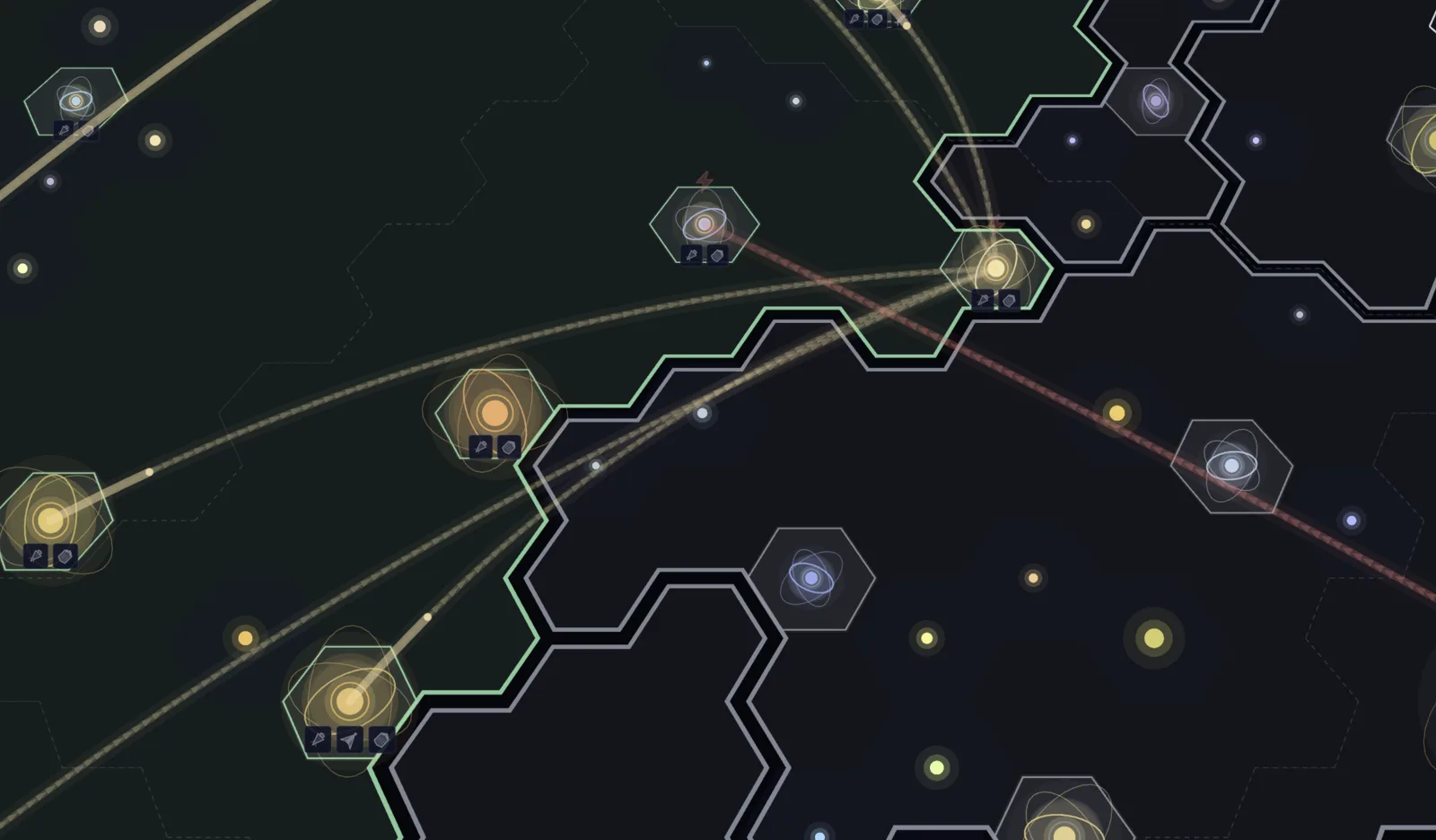
That's the line Old Light draws. Ownership and borders are public across the whole galaxy, readable by anyone including a player who hasn't signed up. What a rival is actually holding, though, you uncover by scouting with probes. The map is honest; the composition is earned. Nobody buys a clearer view of the board than you have. The rules themselves are published the same way, since a surprise on the map only feels fair when you can trace it back to a rule you knew.
The stakes are real#
A world you can't lose anything in gets boring fast. The pull of shared-galaxy strategy is that the border you drew is contested, and someone else can march in and take the system back. Single-player sandboxes and reset-every-round modes both dodge this, and both feel weightless for it. Persistence is what makes a small decision matter.
Old Light is one galaxy, shared, and it persists. Your empire sits on the same map as everyone else's, your rank is a rank among real players, and the territory you project is territory someone can push against. The NPCs fill the map out while the playerbase grows, and they play by the same rules you do, no hidden advantages.
A newcomer gets a fair start#
The last one is the quiet killer. Plenty of these games are technically free and technically fair, but a decade of head start plus a store means a new player joins into a world already decided. The veterans are unreachable and the gap only widens. A good browser strategy game gives someone starting today a real game rather than a spectator seat behind the people who got there first.
Because Old Light sells no power, the only head start anyone has is time played, and on the same clock a newcomer can still close that gap. A newcomer claims a system, a corner of the galaxy that's genuinely theirs, and competes on decisions from day one. It helps that the game is young, so the field is still open. If you want the fuller argument for why the format suits people who don't have hours to burn, I wrote it up in persistent worlds without the time sink.
The honest catch#
None of this makes Old Light the deepest browser strategy game you can open tonight. It's new, so the galaxy is smaller and less content-rich than worlds that have run for ten years, and if raw depth and a packed server are what you're after, the old guard still wins on that. What I'd argue is that the six things above are the ones that decide whether a world is worth living in, and those are the ones I refused to compromise. A good browser strategy game doesn't have to be Old Light, but it does have to get these six right.
Common questions#
What makes a good browser strategy game?#
A world that sells no power, so rank comes from decisions and not a credit card. It runs while your tab is closed and asks you to keep no schedule. It shows the map honestly while making you earn the deeper intel. And its galaxy persists, so what you take can be taken back, and a player starting today still gets a real game against everyone else.
Are browser strategy games pay-to-win?#
Many are, and that is the format's oldest flaw: free to start, built to sell you the advantage later. It isn't required, though. A game can charge for cosmetics or convenience without ever selling power. Old Light sells none, which is the whole reason it exists.
Do browser strategy games run while you're offline?#
The good ones do. The economy grows on timers and fleets travel in real hours, so the world moves whether you are watching or not, with no stamina meter to keep topped up. In Old Light your economy accrues and your fleets cross the map while the tab is closed.
Is Old Light free to play?#
Yes, it's free to play, runs in your browser with no download, and nothing in it makes one empire stronger than another. The only thing separating two players is the moves they made. Because it needs nothing but a browser, it also runs on a Chromebook.
